
The Customers Who Write Before They Buy
Some of your support queue hasn't bought yet. Why pre-sale questions wait behind order-status tickets, and three changes to ask whoever runs support for.

Some of the people writing to your support team haven’t bought anything yet. Each of them has a question that stands between them and the order, and in most queues that question waits its turn behind every “where’s my order?” ticket that arrived first. A customer who has paid and waits will write back and complain. A shopper who waits often buys from someone else, and the lost order never appears in a support report.
Which messages get answered first is your decision. If nobody has made it, your help desk is making it for you. Ask whoever runs your support for three changes. The first two will show you what the help desk decided, and the third gives quote requests a route.
Pre-sale Questions Are Orders Waiting on an Answer
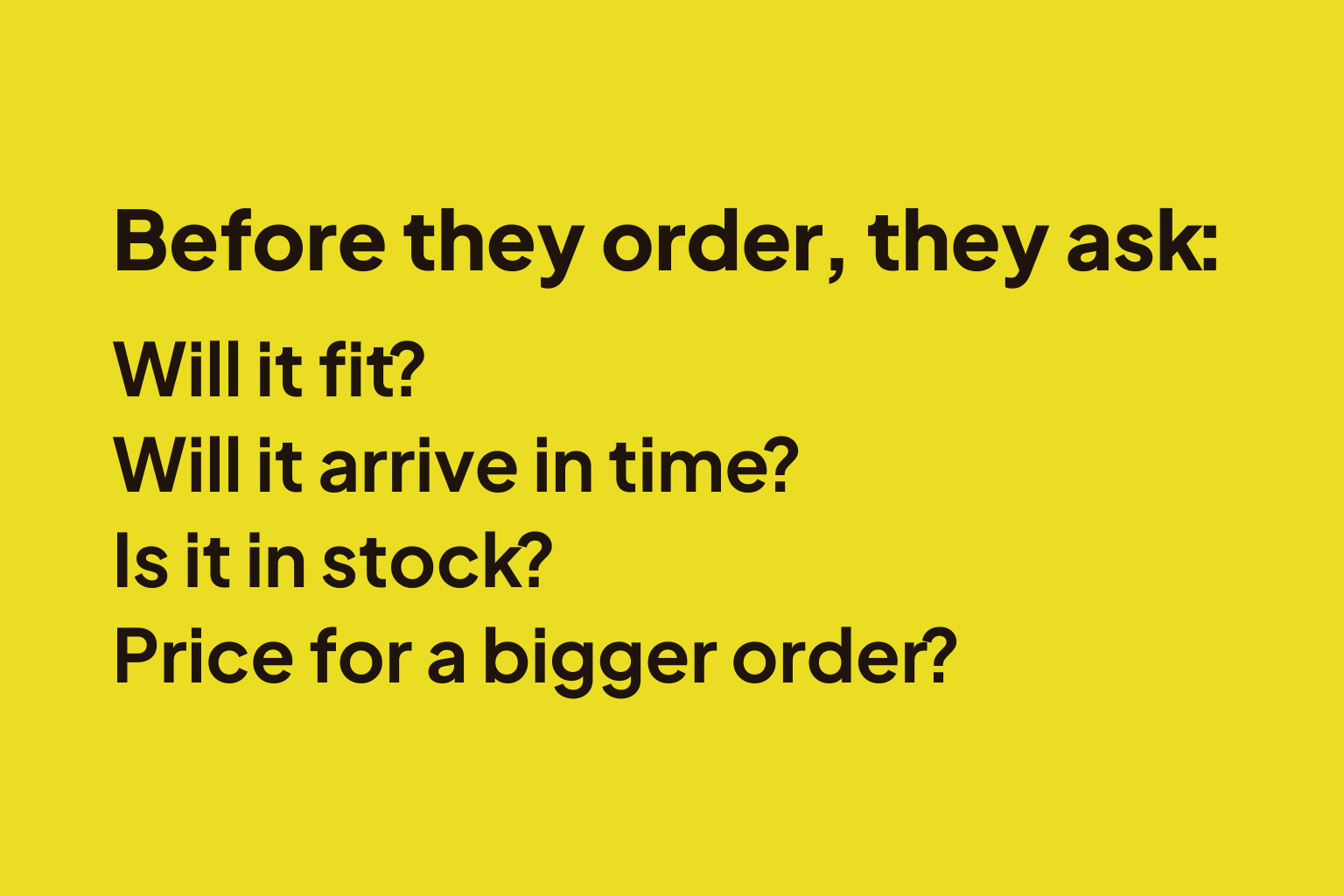
Pre-sale questions come from people who are close to buying and need one thing settled first. Most of them fall into four kinds:
- Will this fit, or work with what I already have?
- Will it arrive by a date that matters to me?
- Is it in stock, and if not, when will it be?
- What would a larger or repeat order cost, and can I buy on terms?
The same four come from a consumer checking a size and from a purchasing manager pricing a repeat order. A business that sells to both gets both in the same inbox.
These look like ordinary support tickets. They come in through the same address as everything else and they’re often short, so the help desk files them with the rest. The difference is that the person asking hasn’t paid yet.
Every pre-sale question is an order waiting on an answer. Once the answer comes, the person asking either buys or decides not to.
A customer who has already paid behaves differently. Their money and their order are with you, so they wait for the reply, and if the wait runs long they write again. You hear about that customer because their next message is a complaint.
A shopper who waits has nothing holding them to you. They open another tab, find the same item or something close to it, and buy it there. The order that went elsewhere leaves no trace in your help desk. Their question gets answered eventually and closes like any other ticket, and the sale shows up in someone else’s numbers.
Arrival Order Is the Help Desk’s Default
Most support queues are worked in the order messages arrive. That’s how a help desk sorts tickets when nobody has told it to sort them another way, and you may never have been asked how you’d like it sorted.
Arrival order feels fair, and it’s easy to run. Everyone waits their turn, and nobody has to judge which message matters more. It suits a customer asking where their order is, who mostly needs a tracking link and a little patience.
Arrival order puts a shopper’s delivery question and a buyer’s price request behind every order-status ticket that came in before them. Your average response time still looks fine, because one question that waited all morning barely moves an average built from every ticket in the queue.
Picture a business that sells shelving and storage online, to homeowners and to companies fitting out warehouses. Monday’s queue holds the weekend’s messages, and most of them ask where an order is. Partway down, a facilities manager asks for a price on enough heavy-duty racking to fit out a new bay. They need it delivered before a move-in date, and they want to know whether it all ships together.
The team works the queue from the top and reaches that message on Tuesday afternoon. The reply says they’ll check pricing and come back. The facilities manager placed the order with another supplier on Tuesday morning.
Nobody at the shelving business hears about it. The ticket closes as answered, and the week’s response time looks normal. The team did what the queue asked of them, and nobody chose to make the facilities manager wait.
A Shopper Needs an Answer That Settles the Question
Answering a pre-sale question sooner helps only when the answer settles it. A shopper asking which charger works with the device they already own needs someone who knows the product well enough to say which one. A buyer asking for a price needs a quote, or a person who can send one.
A settling answer gives the shopper something they can buy on, like the name of the model that fits. For a buyer at a company, it’s usually a price they can take to whoever signs off on the purchase.
A quick reply that says “let me check” leaves the shopper where a slow reply would. They still don’t know whether to buy, and the other store’s page is still open in the next tab. That reply often comes from an agent who can’t see the system that holds the answer, so the question goes to someone else and the shopper waits again.

A pre-sale question has to reach someone who can answer it, and it has to reach them while the person asking is still deciding.
The Order of the Queue Is Your Decision
Which messages go first and who answers the hard ones are business decisions. Your team or provider can run them well once you’ve made them, and until then they run the help desk’s default. Four decisions set how pre-sale questions are handled:
- Which questions count as pre-sale
- How fast those questions get a first reply
- Who answers the ones that need product knowledge
- Where a price or quote request goes
The first decision comes before the rest, because nobody can time or route a question that nobody has tagged. The third is often the hardest for a small team. The person who knows the product best usually has another job in the business, so deciding who answers means deciding whose time those questions get.
Each of these trades something. Putting pre-sale questions first means some order-status tickets wait a little longer, and only you know what an order is worth to your business and how patient your paying customers are.
The last decision matters most for a business that sells to other companies. A quote request from a buyer who isn’t a customer yet has no account and no terms on file, so it lands in the general queue with everything else. Customers who already buy on credit terms need to reach someone who can see their terms. A new buyer needs to reach someone who can price the order.
Three Things to Ask Whoever Runs Your Support
Two of the three changes show you how your queue treats pre-sale questions today, and the third gives quote requests a route. Ask whoever runs your support, whether that’s your own lead or a provider, for all three:
- Tag pre-sale questions for one week. You’ll get a count and a list of the questions people ask most before they order. If the team can’t tell those messages apart from the rest, nobody can put them first.
- Give those questions their own reply time. Ask for how long they waited, reported apart from the overall average. If their wait matches the average, the queue still runs by arrival and they’re waiting behind order-status tickets. A weekly report is where that line belongs once you have it.
- Set a route for quotes. Every price and quote request should go to a named person or a named route. Each of last week’s quote requests should end with a quote sent or a named person who has it. A request with neither is an order on hold.
Whoever runs your support may already do some of this. What comes back will show you which parts, and where the questions from people who haven’t bought yet have been sitting.
How HelpFlow Runs the Operation
Other agencies supply agents. HelpFlow supplies the customer service operation and manages it. We recruit and train the agents, run QA on their work, manage their performance, and run the operation itself.
We’ve run customer service operations for 100+ ecommerce brands.
Start with One Week of Tags
Ask whoever runs your support to tag pre-sale questions for one week. At the end of the week, ask for the count and for how long those questions waited. A small count is still worth seeing, because each of those messages came from someone deciding whether to buy from you.
That wait tells you whether your queue has been putting the people who haven’t bought yet behind everyone who already has. Once you can see it, you can decide what goes first.
Stop Running Customer Service Yourself
HelpFlow runs managed customer service operations for ecommerce businesses. We handle recruiting, training, QA, and performance management. Book fifteen minutes and we'll map your volume and your gaps.